
So I have now said to other teaching librarians on more than one occasion that I actively resist doing traditional database demonstration in my one-shot teaching and the reason for this is explored through this kind of a-ha moment I had at the end of my first semester.
I think some important context to include is that I work at a community college in California so we’re an open admissions institution; we work with everyone at every learning level. It’s one of the things I love most about my job.
Our one-shots in the library are mostly done for introductory classes e.g. First Year Composition & Reading, Public Speaking, Intro to PSYCH, Intro to POLSCI, etc. and tend to be about 80 minutes. Traditionally 15-20 minutes is spent on database demonstration and then students have 15-20 minutes to independently search our databases following the demonstration. Professors, who have regularly brought their students to the library for a workshop, have often required they find and select a journal article relevant to their research topic by the end of the class period. When I was hired at DVC last fall, this traditional model of one-shot instruction was passed down to me.
So I knew from my own experience using academic databases for research that this wasn’t really feasible for our students but I couldn’t pinpoint why. And then over winter break, after my first semester, it hit me.

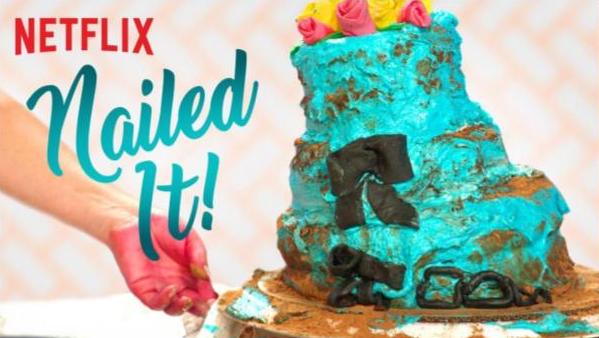

But my lightbulb moment actually came when I realized the false way that time is represented in both Nailed It! and the one-shot.
On the TV show, contestants are given a cake model to emulate and they have 45 minutes to make, bake, frost, and ornately decorate their own cake.
- What I know to be true from my own experience: it takes at least 25 min for a cake to bake, even longer for it to cool and you can’t effectively frost a cake that isn’t a completely cool.
- What’s shown to suggest the impossible is possible: a heavily edited demo video that glosses the process of making this cake.
In our one-shots, students are given a search model to emulate and they have 15 to 20 minutes to search, find, process, and select a relevant journal article.
- What I know to be true from my own experience: it often takes me at least an hour to select the “best” sample article in our databases relevant to my sample research topic to highlight in my lesson to them.
- What’s shown to suggest the impossible is possible: a heavily edited demonstration that glosses my process of searching, finding, processing, and selecting a relevant journal article.
In both instances, it’s not just that the given task is beyond the skill level although that is true. But we, both the show and I, are actually being disingenuous about the process itself.
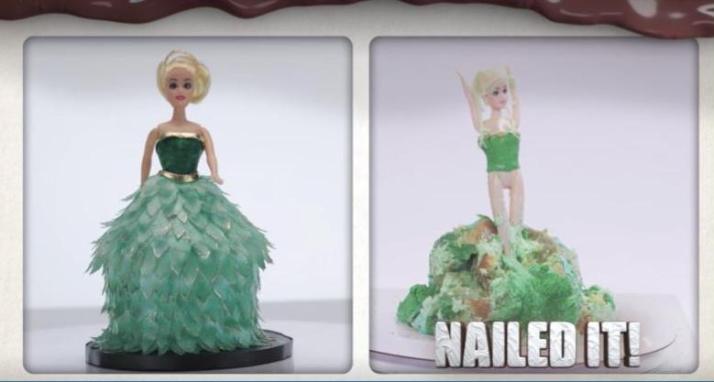
When contestants inevitably fail or “nail it”, what they make is often hilarious…
 Emily Moss - Electronic Portfolio